Where Should Your Small Business Invest to Get More Leads?
You have a website, a limited marketing budget and one clear goal: more enquiries from people who could become customers. Should you invest in SEO, run Google Ads, or divide your budget between both?
The answer depends on how soon you need leads, what you sell and whether your website is ready to turn visitors into customers. This guide compares SEO vs Google Ads through those practical questions.
Build your organic search presence through useful website improvements.
Promote a focused offer to people searching for relevant services.
Connect short-term campaigns with an ongoing website strategy.
SEO vs Google Ads: The Short Answer
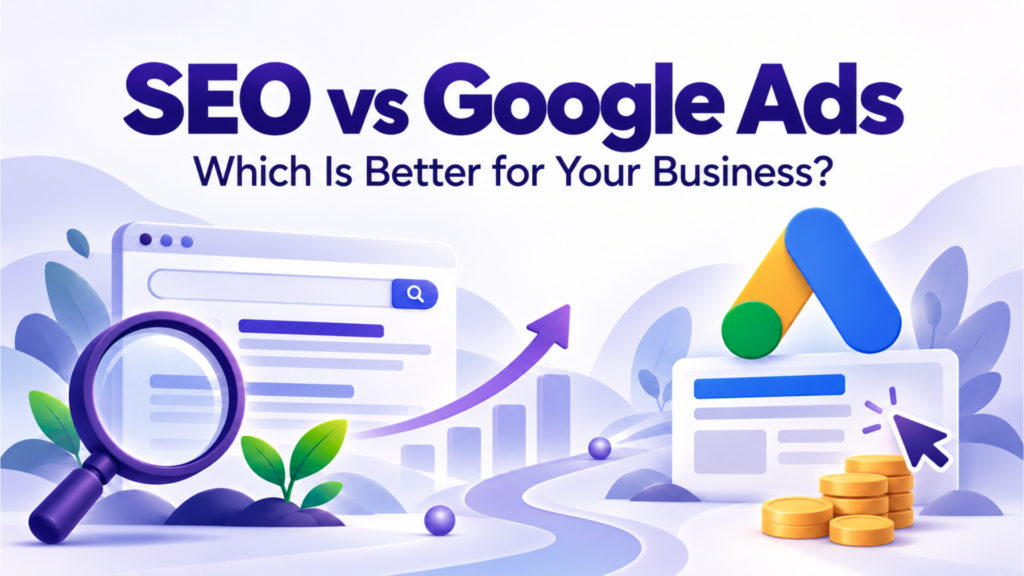
SEO focuses on organic search visibility. Google Search Ads let you pay for advertising opportunities when people search. Ads can help you reach potential customers sooner, while SEO supports an ongoing search presence.
If you need enquiries soon and have a clear offer, a focused ads test may be useful. If you can invest steadily in your website and content, SEO may suit your longer-term plans. Using both can make sense when your budget supports doing each properly.
For the basic distinction, see Google’s explanation of SEO and PPC.
What Are You Actually Paying For?
With SEO, you invest in your website
SEO work can include improving service pages, answering customer questions, fixing technical problems and making related pages easier to navigate. Google does not charge for an organic listing, but the work involved still takes time and resources.
Imagine a home renovation company in Mohali. Its customers may want to know which areas it serves, what affects renovation costs and how a project is planned. Useful pages addressing those questions give people more reasons to explore the business.
With Google Ads, you fund campaigns and their management
For a typical Search campaign using cost-per-click pricing, the media budget pays for ad clicks. Campaign setup, management and landing-page work are separate costs to consider.
The same renovation company might advertise one service in a defined area. Before launching, it should decide what counts as a worthwhile enquiry: a homeowner planning a project, rather than someone looking for employment or free design ideas.
Organic Search vs Paid Search: A Practical Comparison
| Decision point | SEO | Google Search Ads |
|---|---|---|
| Main investment | Website, content and ongoing improvements | Ad spend, management and landing pages |
| Planning horizon | Allow time to assess organic progress | Can bring traffic sooner once eligible ads serve |
| Useful starting point | Important service pages and customer questions | A focused offer with a measurable enquiry goal |
| What to measure | Relevant organic visits, enquiries and customers | Qualified enquiries and customer acquisition cost |
| Main mistake to avoid | Publishing content without a clear business purpose | Buying clicks without checking lead quality |
When Should a Small Business Consider Google Ads First?
Consider a focused campaign when you have a specific service to promote, capacity to handle enquiries and a landing page that explains the offer clearly.
A training centre opening a new batch is a useful example. The business has a deadline, a defined location and a clear action: enquire about admission. A campaign can be planned around that offer rather than advertising every course at once.
Before spending, answer these questions:
- Which service are we promoting?
- Which locations can we genuinely serve?
- What information will a visitor need before contacting us?
- Who will respond to enquiries, and how quickly?
- How will we distinguish a relevant lead from an irrelevant one?
Fast traffic is useful only when the business can handle it. If calls go unanswered or the enquiry form fails, fix those problems before increasing the budget.
When Does SEO Make More Sense as the Main Priority?
SEO may be a better main priority when your business has ongoing demand and can invest in improving its website over time.
For example, an accounting firm may need separate pages for bookkeeping, tax support and payroll services. A single page saying “we provide financial solutions” leaves customers with unanswered questions. Improving those pages creates a clearer foundation for search visibility and enquiries.
Start with pages connected to your actual services. A useful service page should explain who the service is for, what it includes, how the process works and how to contact you.
Google’s SEO Starter Guide explains that the impact of changes varies: some may be reflected quickly, while others can take months. Treat SEO as an ongoing investment with review points.
Which Option Is Better for a Limited Budget?
A small budget makes focus especially important. Trying to promote every service across several cities can leave you with too little information to judge what works.
Choose one business priority first. That might be improving a valuable service page or testing an ad campaign for one profitable service. Keep essential website maintenance in place whichever route you choose.
For ads, estimate whether the likely click costs leave room for an informative test. For SEO, agree on specific work and progress measures rather than paying only for a promise of rankings.
There is no universal budget split. A new business with an urgent launch and an established business with useful organic traffic may need very different plans.
Compare Customer Value, Not Just Clicks
Ten enquiries are not automatically better than five. The smaller group could contain more people who need your service and are ready to buy.
Keep a simple record of each enquiry: its source, whether it was relevant, whether it became a customer and the value of the sale.
Here is a hypothetical example, not a client result. A campaign costs ₹12,000 in ad spend and produces 20 enquiries. If four become customers, the media-only acquisition cost is ₹3,000 per customer.
Now include management fees, landing-page costs and the cost of delivering the service before judging profitability. Apply the same discipline to SEO: organic clicks have value when they support relevant enquiries and business outcomes.
Can SEO and Google Ads Work Together?
Yes. They can support different parts of a marketing plan.
You might use ads to promote a time-sensitive offer while improving the website pages that explain your core services. Questions from campaign enquiries can also suggest useful topics for website content.
For example, if prospects repeatedly ask whether installation is included, answer that clearly on the relevant page. It helps visitors arriving through either channel.
However, buying ads does not buy better organic rankings. Google confirms that advertising does not affect organic search placement.
A Simple Plan for Your First Review Period
Start with the website. Test forms and phone links on mobile. Make the service, location and next step clear.
Choose one priority. Define the service you want to grow and what a suitable customer looks like.
Agree on measurement. Record enquiries and sales alongside traffic. Choose a review period appropriate to the channel and available data.
Review the reasons behind results. If leads are irrelevant, check targeting and messaging. If visitors hesitate, review the offer and page. If enquiries do not become sales, examine follow-up too.
Change your plan based on what you learn rather than assuming every disappointing result requires a larger budget.
Frequently Asked Questions
Is SEO better than Google Ads for small businesses?
It depends on your goals, timeline and website. SEO can suit an ongoing visibility plan, while Search Ads can suit a focused campaign where quicker traffic matters.
Is SEO free?
Organic listings do not carry an advertising charge. Research, writing, development and SEO management still require time or money.
Should I stop SEO when I start Google Ads?
Keep maintaining important website pages. If your budget is limited, prioritise specific work rather than abandoning the website or splitting resources across too many activities.
Will Google Ads improve my organic rankings?
No. Paid advertising and organic ranking are separate. Website improvements made during campaign work may also help users, but ad spend itself does not improve organic positions.
How do I know which channel brings better leads?
Compare relevant enquiries, customers won and total costs. Use consistent definitions so that each channel is assessed against the same business goal.
Build a Marketing Plan Around Your Business Goals
Choosing between SEO and Google Ads starts with understanding your business, your customers and the results you need.
AAI Web Tech Solutions helps businesses plan SEO and paid search campaigns around relevant services and measurable goals.
Get Started Today →Contact us or book a free consultation.