Technical SEO Guide: Boost Your Website’s Performance with AAI Web Tech
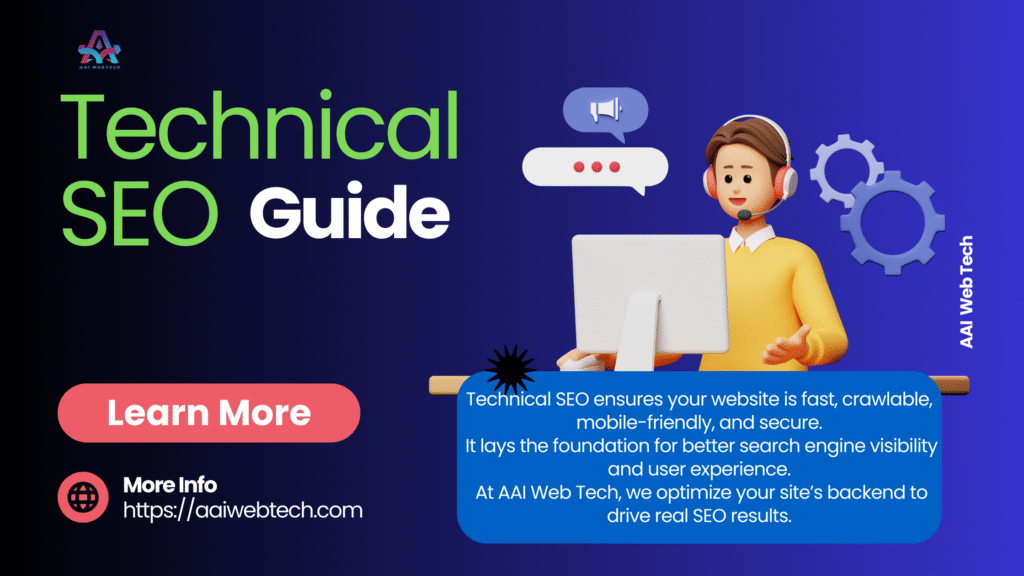
A good-looking website is only part of a successful online presence. Search engines also need to be able to crawl, understand and index your pages properly. That is where Technical SEO becomes important. Technical SEO focuses on the technical foundation of a website. It includes crawlability, indexing, website structure, page performance, mobile usability, HTTPS, canonical URLs and structured data. When these elements are handled correctly, search engines can access important pages more efficiently and users get a better experience. This Technical SEO guide explains the most important areas businesses should review and improve to build a stronger website foundation. AAI Web Tech Solutions, we help businesses identify technical SEO problems and improve website performance, search visibility and overall SEO health. What Is Technical SEO? Technical SEO is the process of improving a website’s technical structure so search engines can crawl, understand and index its content effectively. Google’s technical requirements state that a page generally needs to be accessible to Googlebot, return a successful HTTP status and contain indexable content to be eligible for indexing. Meeting these requirements does not guarantee that a page will be indexed, but they provide the basic technical foundation for search visibility. Technical SEO is different from content optimization or link building, although all three work together. For example, a business may have excellent content and quality backlinks. But if important pages are blocked from crawling, incorrectly canonicalized or difficult to access, the website can still face search visibility problems. Why Technical SEO Matters for Your Website A technically healthy website supports both search engines and visitors. Better Crawling and Indexing Search engines use automated crawlers to discover and process web pages. A clear site structure, crawlable links and a properly configured sitemap can make it easier for search engines to discover important content. Google recommends using tools such as Search Console to monitor crawling and indexing issues. Better Website Experience A website that loads quickly and works well on mobile devices is easier for visitors to use. Google recommends monitoring Core Web Vitals and using tools such as PageSpeed Insights to evaluate page performance. Stronger SEO Foundation Technical SEO supports other SEO activities. When search engines can properly access your pages, understand your website structure and process your content, your on-page SEO and content strategy have a stronger technical foundation. Fewer Technical Problems Regular technical checks can identify problems such as: Broken links Crawl errors Incorrect redirects Duplicate URLs Missing canonical tags Indexing problems Slow pages Mobile usability issues Finding these problems early can prevent them from affecting larger parts of your website. Major Areas of Technical SEO 1. Website Crawlability and Indexing Crawlability determines whether search engine crawlers can access the pages and resources they need. Important areas to review include: Robots.txt configuration XML sitemap Internal links HTTP status codes No-index directives Crawl errors Important page accessibility Google recommends using robots.txt to control crawling where appropriate, while no-index should be used when the goal is to prevent a page from appearing in search results. These controls should not be confused with each other. Use Google Search Console to review indexing and crawling reports for your website. 2. XML Sitemap Optimization An XML sitemap helps search engines discover important URLs on your website. Your sitemap should generally contain the URLs you want search engines to consider for indexing. Check that: Important pages are included Deleted URLs are removed Redirected URLs are not unnecessarily included Canonical URLs are consistent The sitemap is accessible The sitemap is submitted through Search Console Google explains that sitemaps can help it discover and prioritize important URLs, especially when pages are new or difficult to discover through normal internal links. 3. Website Speed and Core Web Vitals Website performance affects user experience and should be part of a technical SEO review. Focus on: Largest Contentful Paint (LCP) Interaction to Next Paint (INP) Cumulative Layout Shift (CLS) Image optimization Browser caching Server response time CSS and JavaScript efficiency Large images, unnecessary scripts and poorly optimized page builders can increase loading time. For WordPress websites, review plugins, images, fonts and above-the-fold elements when investigating performance issues. You can test individual pages with Google PageSpeed Insights. 4. Mobile-Friendly Website Google has completed its move to mobile-first indexing, which means the mobile version of a website is used for indexing and ranking. Your mobile website should therefore provide the same important content and functionality as the desktop version. Check: Responsive layout Mobile navigation Text readability Button sizes Image display Forms Page speed Structured data A responsive design makes it easier to maintain a consistent experience across devices. 5. HTTPS and Website Security HTTPS protects the connection between the user’s browser and your website. Google recommends using HTTPS rather than HTTP to improve security for both users and websites. Make sure your website has: A valid SSL certificate HTTPS URLs Proper HTTP-to-HTTPS redirects No unnecessary mixed-content warnings Consistent internal links using HTTPS 6. Canonical URLs and Duplicate Content Websites can sometimes have multiple URLs showing the same or very similar content. Canonical tags help indicate which URL should be treated as the preferred version. Common causes of duplicate URLs include: URL parameters HTTP and HTTPS versions WWW and non-WWW versions Trailing slash variations Duplicate category pages Similar content pages Google recommends understanding canonicalization and using canonical signals to help it identify preferred URLs. Canonical tags should be used carefully. They are not a solution for every type of duplicate or low-quality page. 7. Internal Linking and Site Architecture A logical website structure helps users and search engines move between related pages. For example, an SEO agency website might organize its content around: SEO Services → Technical SEO → Technical SEO Guide → Related SEO Resources Use descriptive internal links rather than repeatedly linking with generic phrases such as “click here.” Internal links can help visitors discover related information and help search engines understand the relationship between pages. You can also use breadcrumbs where appropriate. 8. Structured Data and Schema Markup Structured data provides search engines
Technical SEO Guide: Boost Your Website’s Performance with AAI Web Tech Read More »
